By Jennifer Corriea
Dating back to the mid-1850s, with very few exceptions, there has been a fair in Petaluma. From the first venue at the corner of Middle Two Rock Road and Bodega Avenue to its present location on Fairgrounds Drive, one certainty is that it has become a tradition in the community.
However, like everything in our continuously evolving society, the fair has changed over the years, whether it be in location, purpose, or a combination of both.
At present, the fairgrounds sits where it has since 1936, when, in the midst of the Great Depression, the fair’s directors and the City of Petaluma agreed to a lease, giving the Fourth District Agricultural Association (FDAA) sole control over what was then known as Kenilworth Park.
By doing so, the FDAA could apply for federal funds through the Works Progress Administration which would go toward construction costs and ultimately was used to create the barn structures on the grounds, but at that juncture no one would have surmised that the agreement, which expired in 2023, would become a source of contention that put the fair’s existence in jeopardy.
Fast forward to June 2025, two years after the lease had expired and nearly a decade after the FDAA had begun trying to negotiate a path forward with the city.
Yet, despite its best efforts and after seemingly being rejected by the city on all fronts, the Sonoma-Marin Ag Association (SMAA) was formed and had to accept the city’s conditions for hosting the fair.
One particular source of frustration during the negotiations for SMAA CEO Mandy Clendenen was the city’s position on funding for district ag associations, as she explained, “The city often said that because we exist under the umbrella of the California Department of Food and Agriculture, we receive state funding, but the actuality is what we get is minimal. Our funds come primarily from our sponsors, in other words, the people in Sonoma and Marin counties.”
For Farm Bureau Executive Director and SMAA Board President Dayna Ghirardelli, the debate over income centers around the fact that a five-day fair cannot sustain the facility, which has also served as an evacuation and resiliency center over the years.
“My hope and vision is that we are able to find property that will allow us to produce our fair once again. It’s what we do, it’s our expertise, and we do it well,” said Ghirardelli. “However, the reality is that fairs in and of themselves are not profitable, so the need for supplemental revenue year-round is necessary. This is why the loss of the fairground’s lease in Petaluma took the wind out of our sails. The city will find that the ‘Petaluma Fair’ must be subsidized by the year-round uses while also being supported by the city’s coffers and budget. That said, we’d like to get back to the model where we are a property manager, event coordinator, fair producer, and community connector.”
Still, as the adage goes, “the show must go on,” and so, as it had for so many years, the gates opened to fairgoers and exhibitors, although the feeling was vastly different.
With the City of Petaluma controlling the midway, concessions, and entertainment, the SMAA worked under contract to handle the back end of the venue, which included the agricultural and still exhibits.
While people could pass back and forth at will between the two areas, there was a disjointed impression, and despite both sides trying to move beyond it, a palpable tension remained.
Gone was the World’s Ugliest Dog Contest, an event attracting worldwide attention, but so too were things fairgoers had come to expect, like a petting zoo or big-name entertainment.
Perhaps even more perplexing, however, was the city’s decision to tear down the old sheep show ring on the day the livestock exhibitors arrived.
Thus, even with the familiar presence of 4-H and FFA members and their livestock occupying the barns and showing in the rings, there was a sense that something was coming to an end.
Although no one has confirmed whether the SMAA will return to the Petaluma Fairgrounds in 2026, Clendenen and the board of directors are taking a proactive approach by focusing on the future.
“My wish is that the city will contract for the exhibits again,” said Clendenen, who took over as CEO in January 2024, having served previously as the exhibits and operations manager. “People want to keep agriculture as part of the fair. Hopefully, the city recognizes that exhibits are assets to this event and that putting them together requires unique talents that they don’t have. The reality is that without this end of the fair, the event is really just a festival.”
Clendenen, herself a product of small-town fairs, believes that not only are life-long memories made by the exhibitors at these events, but it’s also beneficial in terms of providing a setting to introduce the public to agriculture, which is significant given the gap between people’s desire to understand their food sources and what they know.
It’s a viewpoint that is shared by Ghirardelli, who also grew up showing at the fair.
“The fair is a treasured pastime for me. Many childhood memories and life lessons were formed as a result of the Sonoma Marin Fair. Raising animals to exhibit them and share my knowledge with the public was a huge responsibility. I’m not sure I recognized how much until I look back on it through the lens of an adult who understands the importance of educating the public on where our food comes from, because in most cases, the fair is the only opportunity for non-farm adults and children to interact with animals and visit with the very folks who produce their food. It is an opportunity to bring this kind of engagement to the masses.”
Despite the passion to maintain the fair’s traditions, another crossroads in the splintered relationship between the SMAA and the city occurred on July 15, which marked the final day the association could remain on the fairgrounds and one for Clendenen that produced conflicting emotions in the sense that it represented the end of an era, but also marked the beginning of a new chapter for the SMAA.
“It’s definitely emotional given the termination of long-term employees and what has been,” said Clendenen. “Still, we now have a path forward with new branding and partnerships, which is exciting.”
One of the new changes includes relocating the SMAA office to the Sonoma County Fairgrounds, formerly the Racing Secretary’s Office.
Other preemptive actions that have already been taken include contracting with the Marin County Fair to bring back and manage livestock shows at the San Rafael location, in addition to continuing to produce the World’s Ugliest Dog Contest, which has been relocated to the Sonoma County Fair in 2025.
Nonetheless, Clendenen has loftier goals for the SMAA, although she recognizes that the road to achieving them will not always be smooth.
“Change is inevitable, and there will be significant growing pains in searching for growth. We believe, however, that people will rally around this new venture. We will definitely need to fundraise, but we are exploring ways to foster a new generation of exhibitors and encourage people to reengage as we reestablish our volunteer program. No matter what happens, though, we want people to know we are not giving up on the dream.”
While the SMAA has been one of the largest entirely junior livestock shows in the state, particularly among dairy exhibitors, Clendenen’s desire to increase the number of non-livestock exhibitors has led her to look toward the Slow Food Movement and incorporate industry professionals to judge other competitions.
Perhaps the more ambitious goal and ultimate solution, though, is finding that piece of property that would provide the self-sufficiency to develop not only the fair, but also to continue fostering agricultural education while serving as an event center and generating additional revenue.
With the fair and administrative relocation now complete, Clendenen plans to meet with the city in the next few months to see the direction the relationship may take, but says that no matter what, the SMAA will remain dedicated to the mission of the district agricultural associations which according to the CDFA is to “highlight various industries, enterprises, resources and products of the state.”
Therefore, as the SMAA begins the process of finding its place within the ever-changing societal dynamic, Clendenen is resolute in that it is full steam ahead, saying, “We continue to do this not just for the ag community, but for those people who don’t have anything to do with it. It’s for those people who will always remember coming to the fair and the memories they made. We have something to fight for now more than ever.”

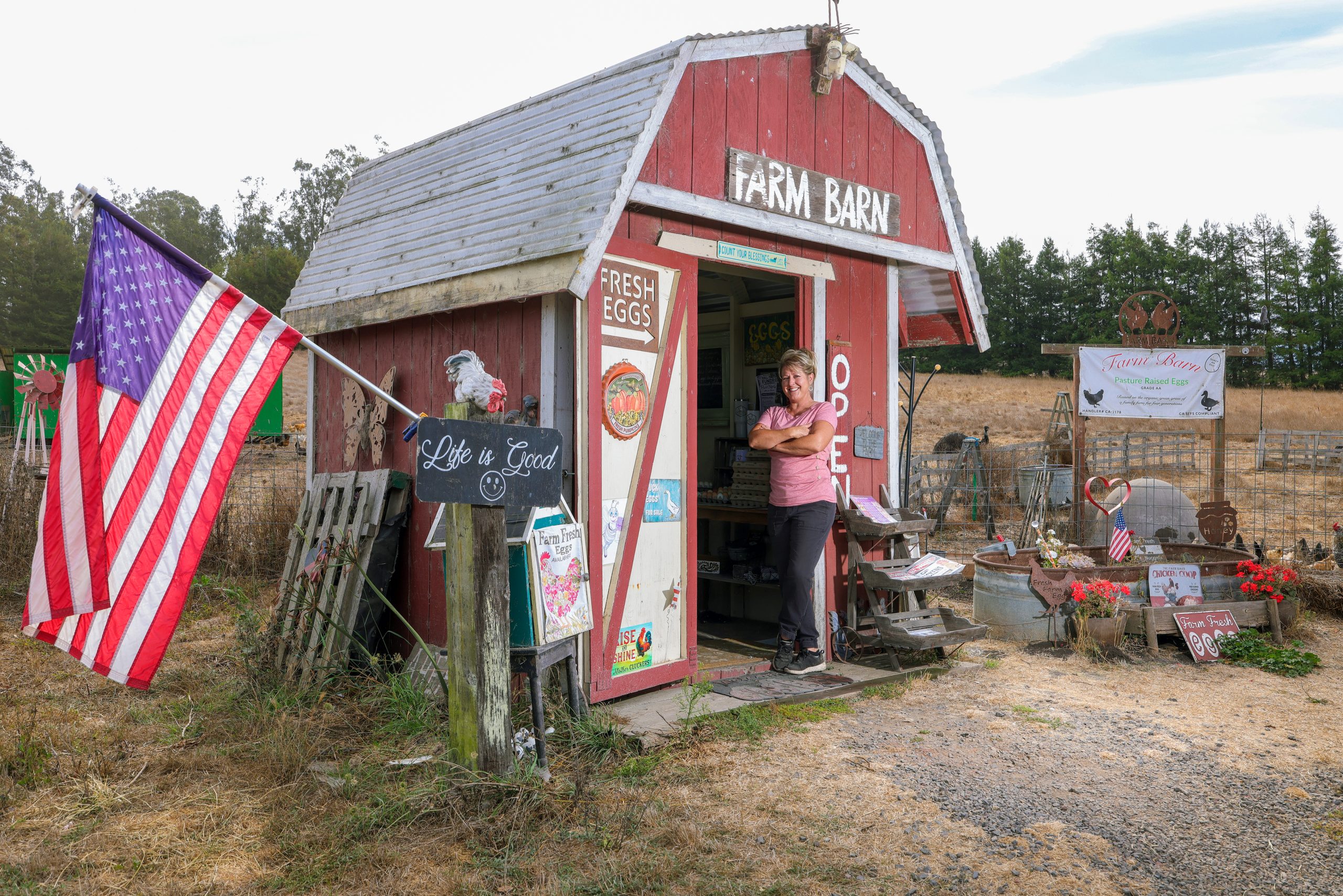
Mandy Clendenen, CEO of the Sonoma‑Marin Agricultural Association.